Nathan Graybeal’s Secrets to Melodic Improv

Today we’re going to check out some of Nathan’s secrets for melodic improv—concepts like motivic and rhythmic development, how to use scales as musical tools rather than exercises, adding colors to your lines with extension tones, using chromaticism to create stronger melodies, and how transcription can help you develop your own unique voice.
Also, if you're interested in going even deeper in these topics that we're going to cover here, you can check out our course entitled Melodic Improvisation. In the course, we take all these concepts that we'll go over today even further with guided exercises, musical examples, and application over jazz standards. That way, you can start incorporating these into your own playing right away. And if you want to hear how Nathan plays through anything we talk about, make sure to check out our accompanying YouTube video, Nathan Graybeal’s Secrets to Melodic Improv.
Now let’s get playing!
Contents
Motivic development
Playing melodically is all about playing lines that you'd be able to sing pretty easily after just one listen. And so, what we're going to do is take simple motifs over a blues and see how we can evolve them in real time.
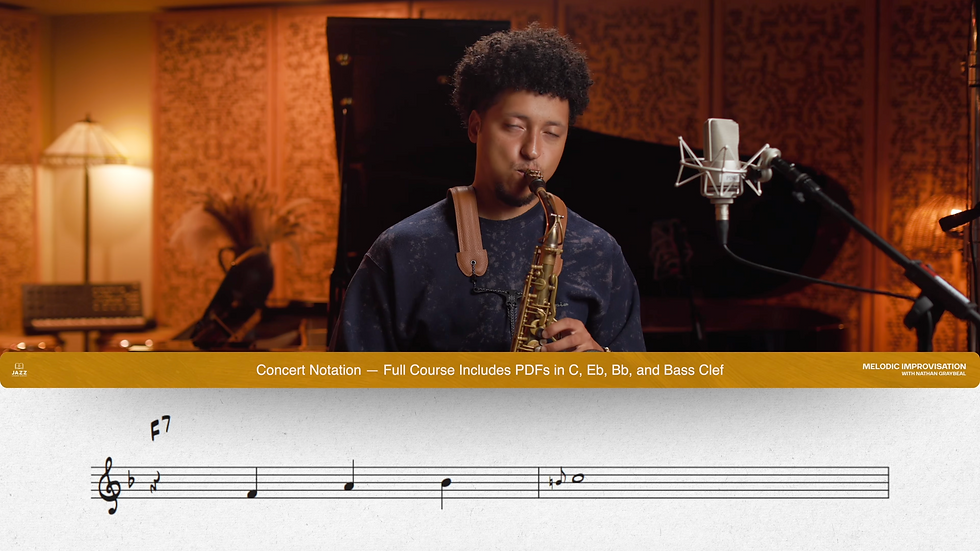
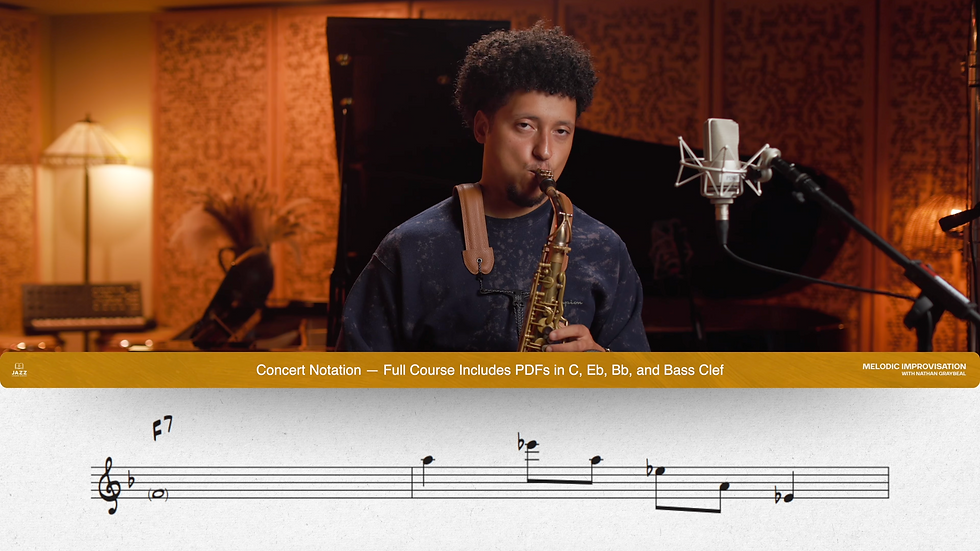
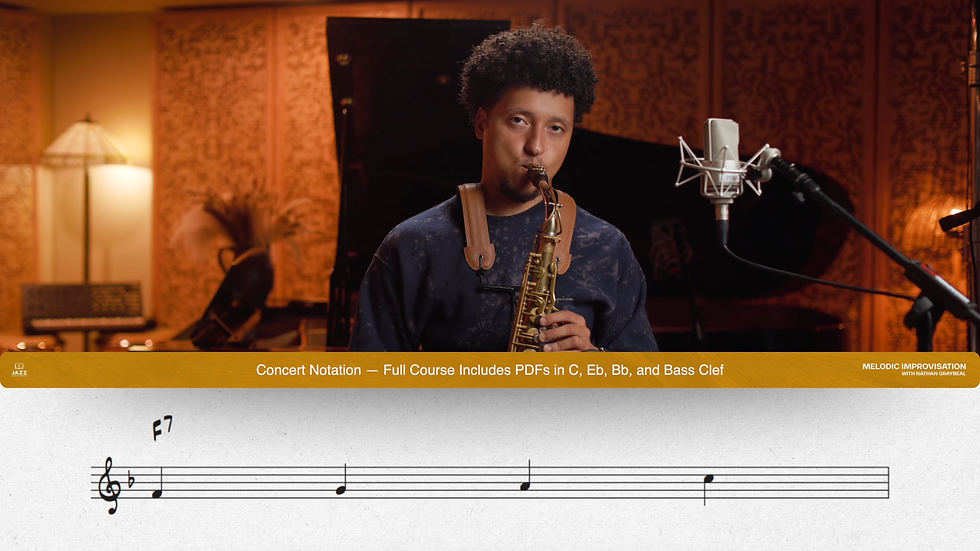
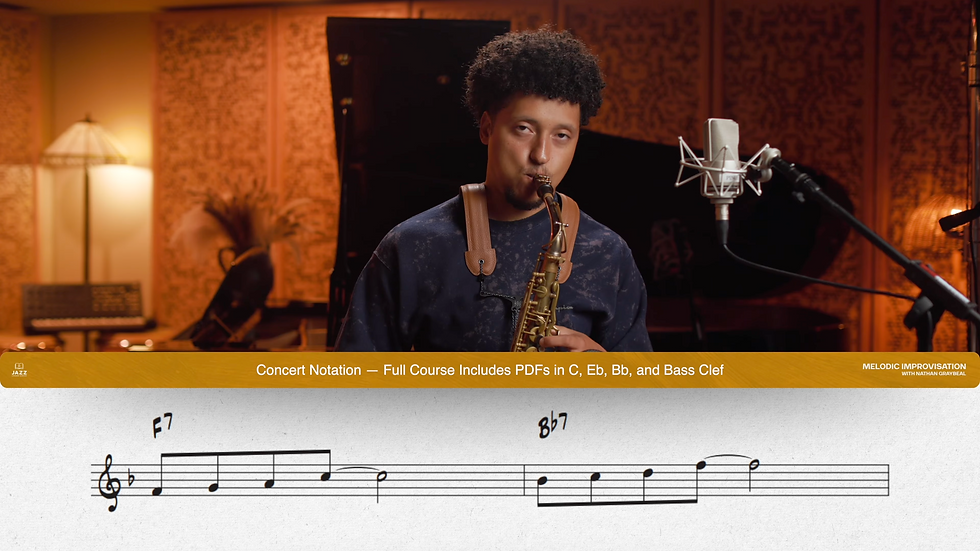
The first shape is very simple. It's just 1, 3, 4, 5. So that will work over an F7.
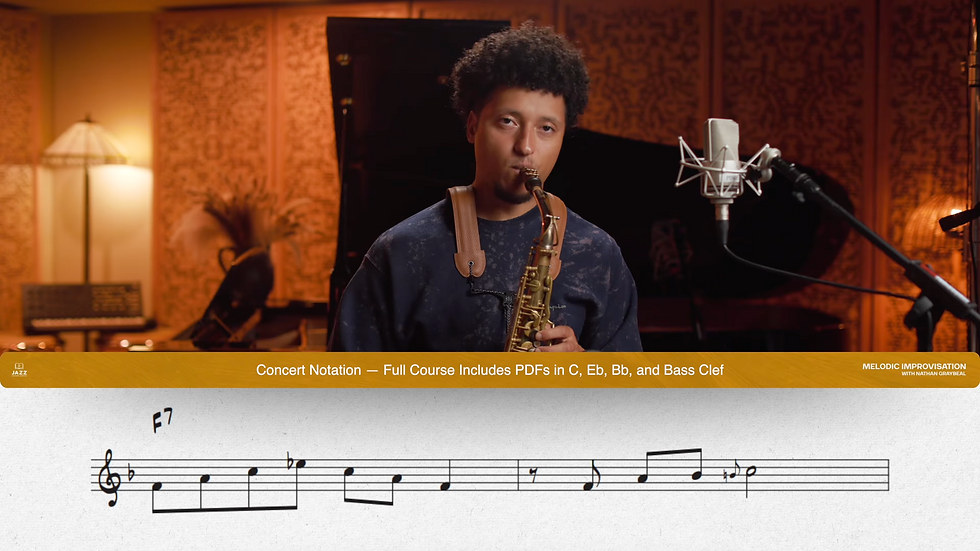
And then when we arrive at the IV chord, we can play that same shape but flatten that second note, and it's going to give you this chord's b5, 7, 1, and 9.
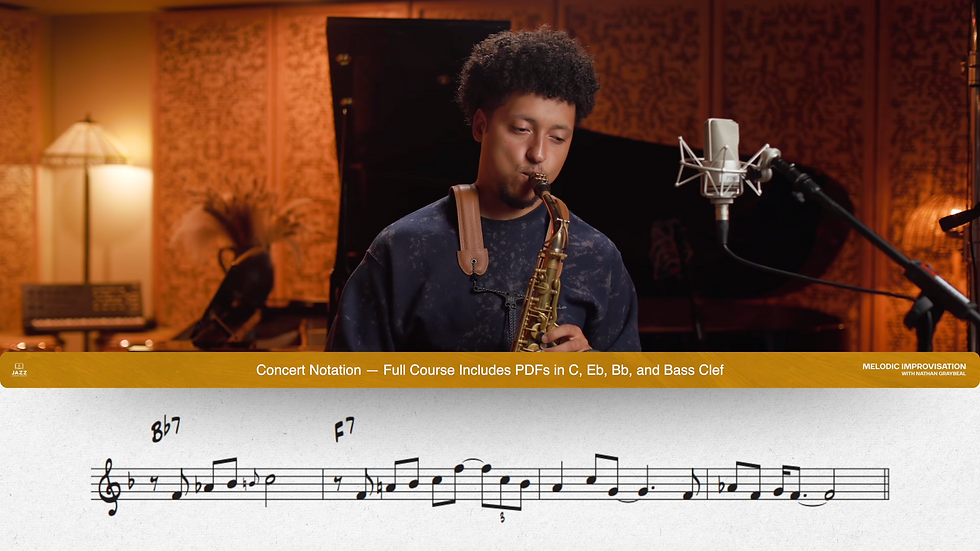
You can just use this as a starter. Let’s look at an example, and see how it evolves through time.
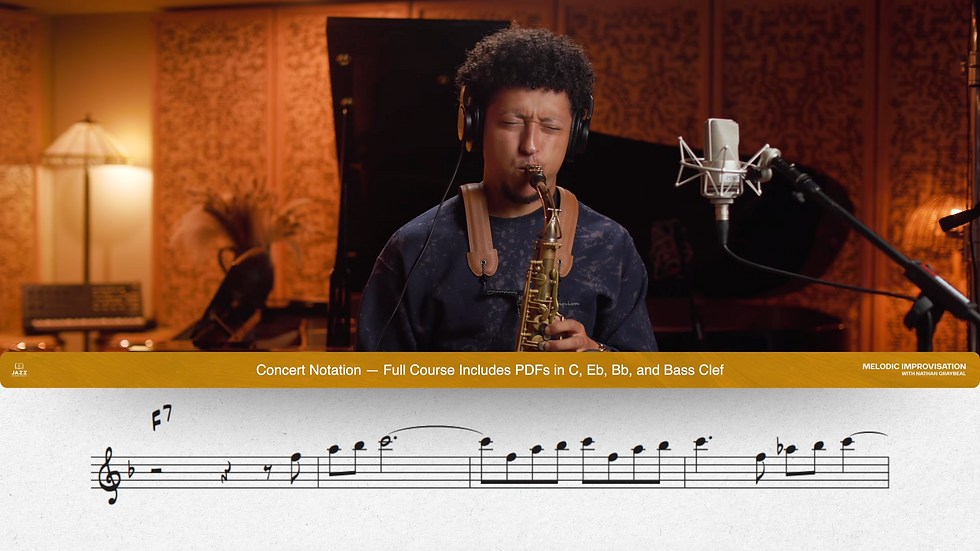

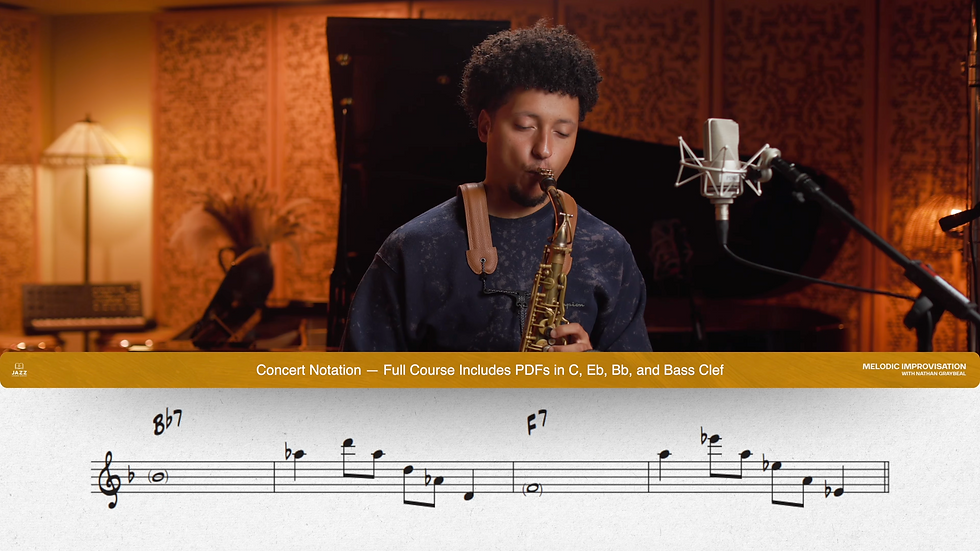
So that's a really good shape. Another shape you can use is playing the 3 and the 7. It gives you this tritone.
And then when you get to the IV chord, you can play those tritones, and they're very close together.
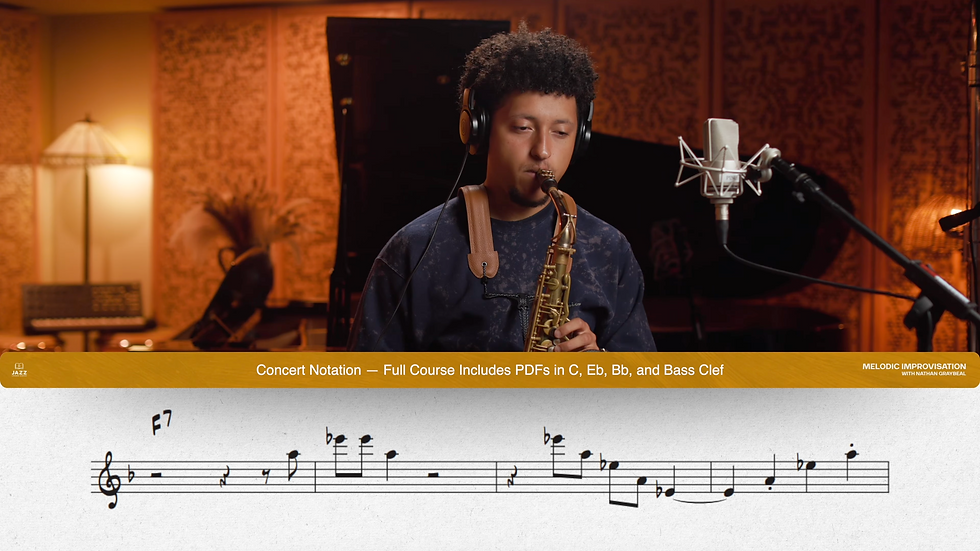
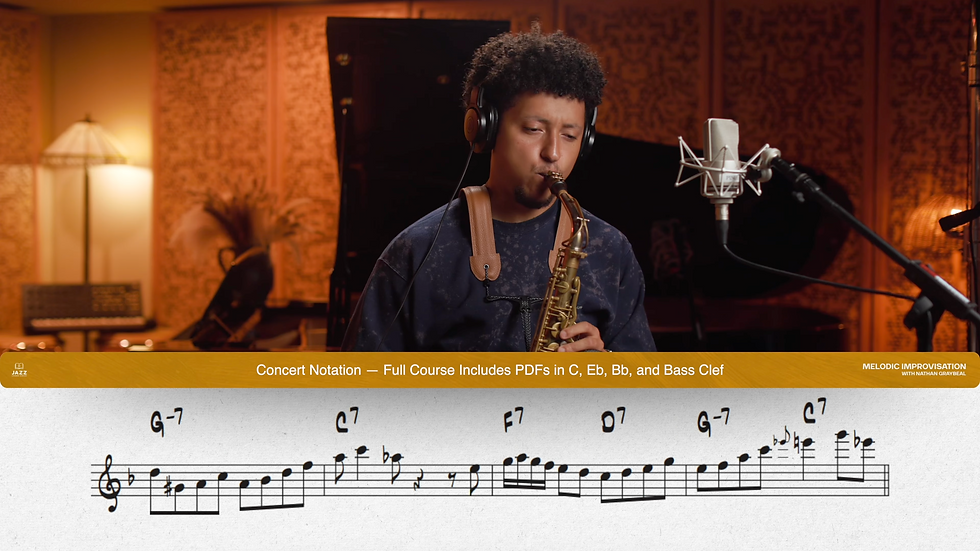
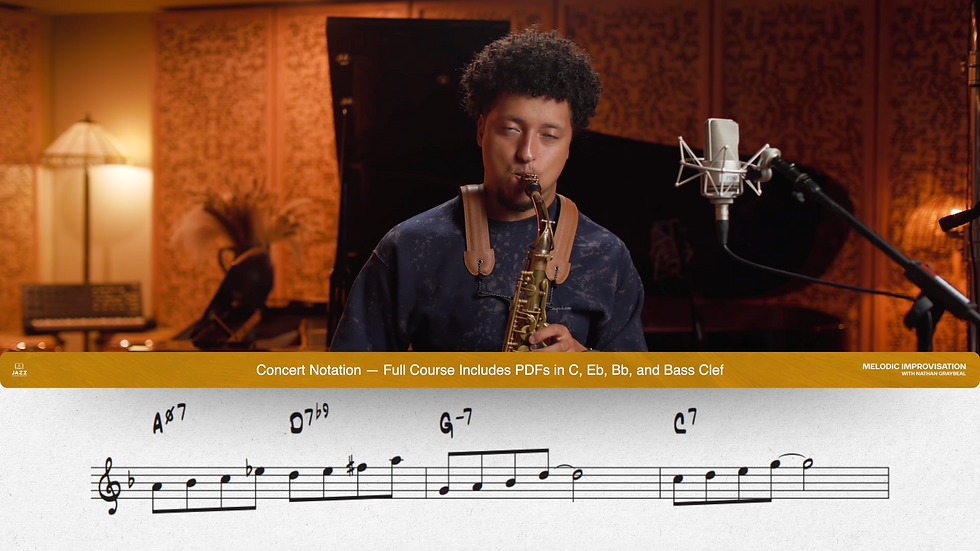
Another really useful shape that John Coltrane used all the time, and really every bebopper, is the 1, 2, 3, 5 shape. So over the one chord, we have this.
Over the IV chord, it looks like this, and then you can use it on all the other chords as well, such as the iii, vi, and the ii-V.
Rhythmic development
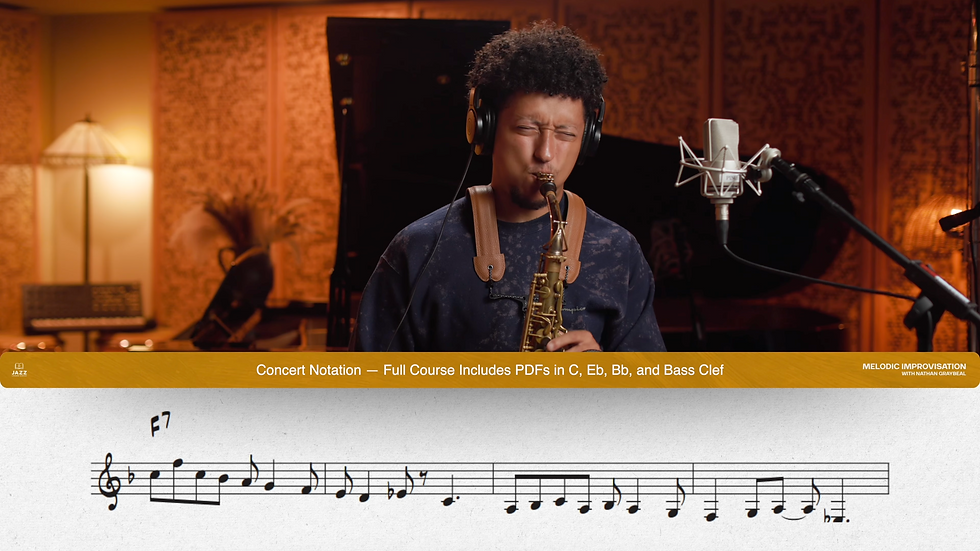
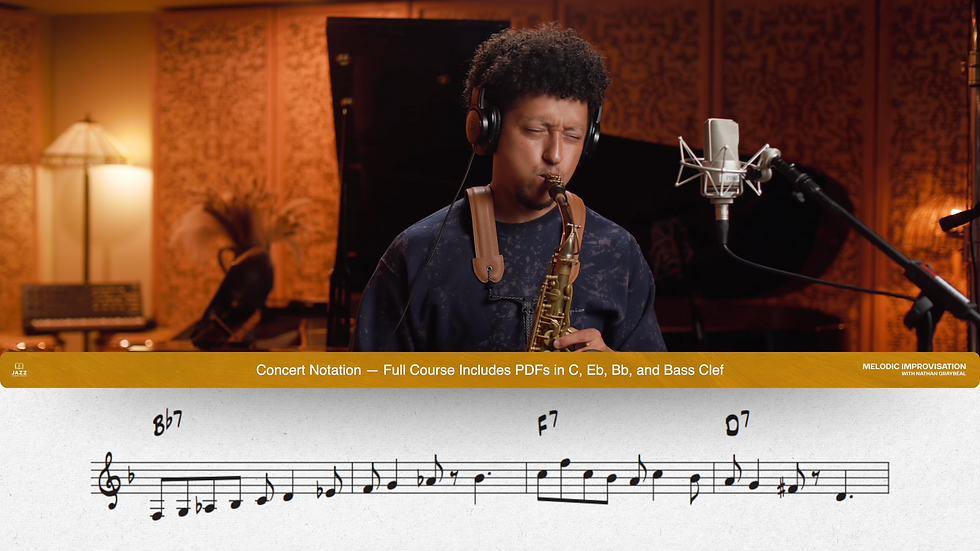
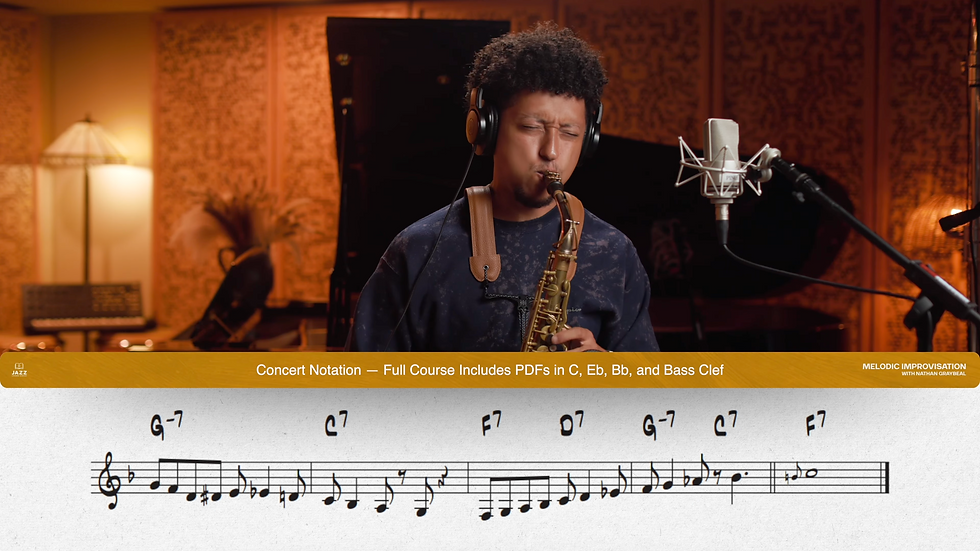
Now we're going to go over rhythmic development. Rhythm is a very important part of jazz. Some would even argue that it is the most important part of jazz. A really helpful exercise to work on your rhythm and improvisation is to take a specific rhythm and just apply it through an entire chorus of your improv. So let's play a chorus and try to really stick to a rhythm.
Chromatic voice leading
Enclosures are a very, very important concept in bebop. Charlie Parker did it all the time. Coltrane did it all the time. Clifford Brown did it all the time. All of them did!
And so, what it is, at the very minimum, is a two-note approach where we essentially sandwich the target note. So let's go back to that Bbmaj7 chord. Here is the 3, and now you can make a diatonic enclosure by playing the approach note from below that target note, and then the approach note from above that target note, and then the target. You can do that through every chord tone.
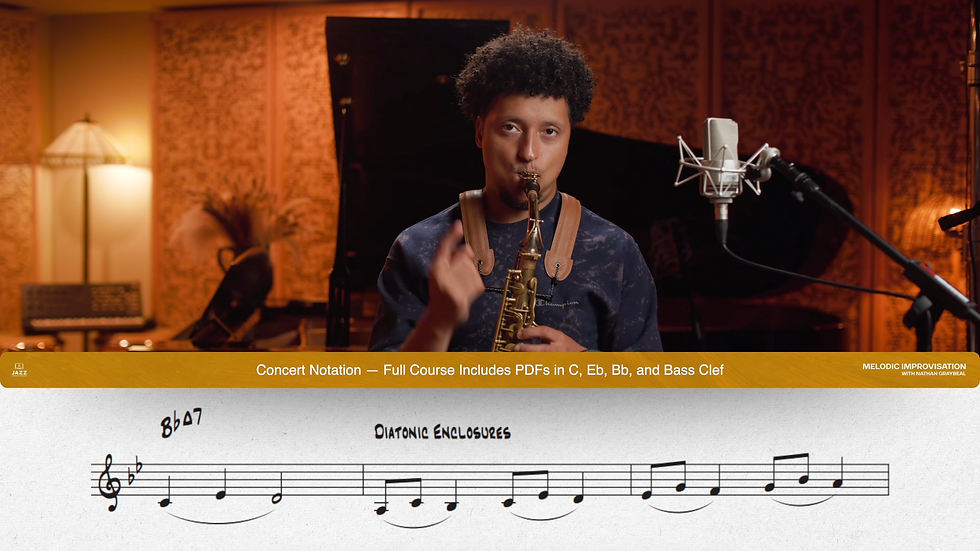
So here's the root. Here's the third. Here's the fifth. And here's the seven. Nathan noticed while transcribing Hank Mobley that he likes to do a little chromatic figure to decorate this chord tone.
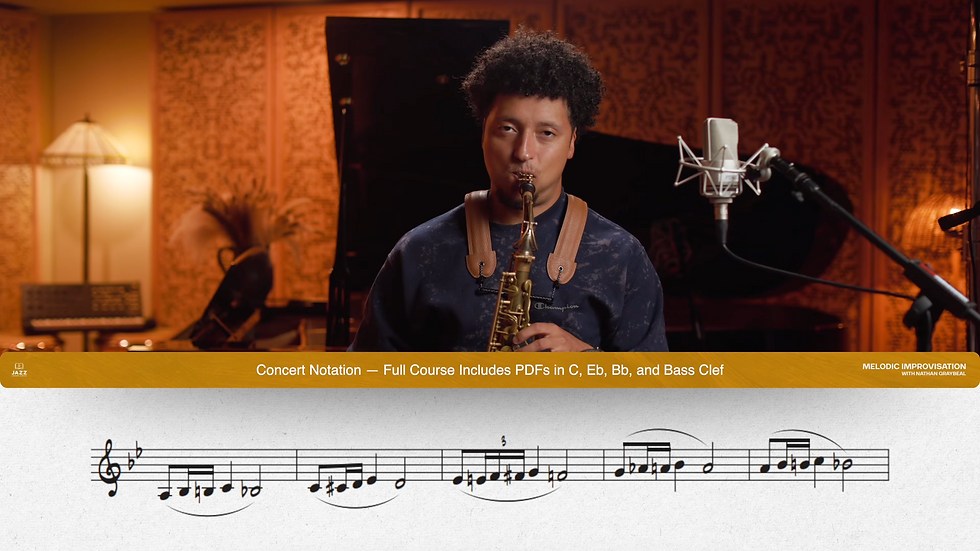
That's a really cool one to learn. But you can also play the approach note from above first, and then below, and then the target note.
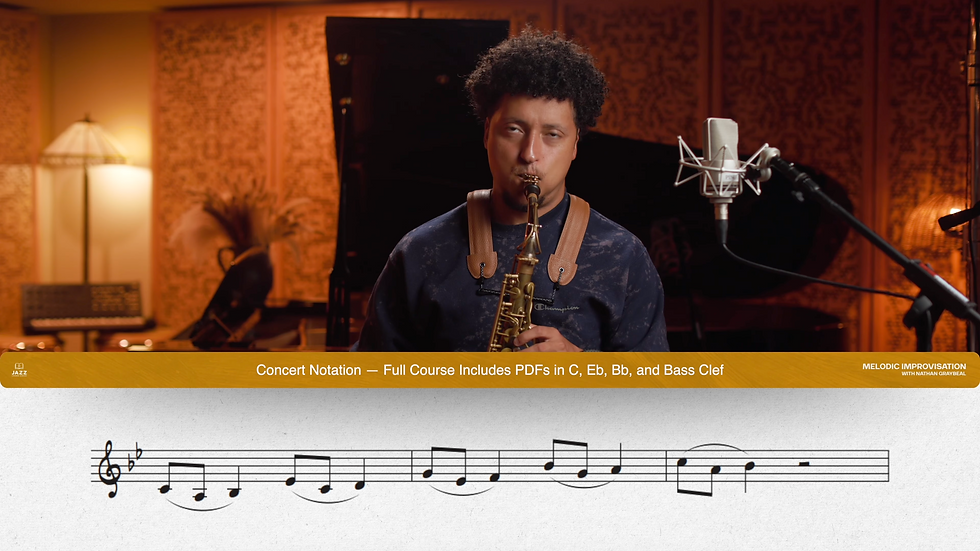
Now enclosures can get pretty extensive, especially when we start adding chromaticism. So let's get into it now. The most common enclosure to find in bebop solos is when you play a chromatic note from below and then a diatonic note from above.
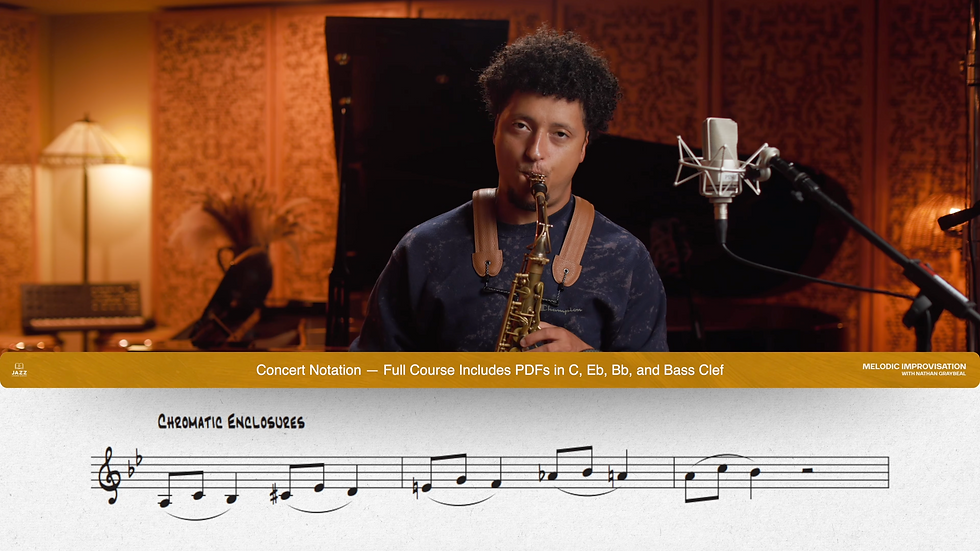
So that looks like this, and you can also switch the order.
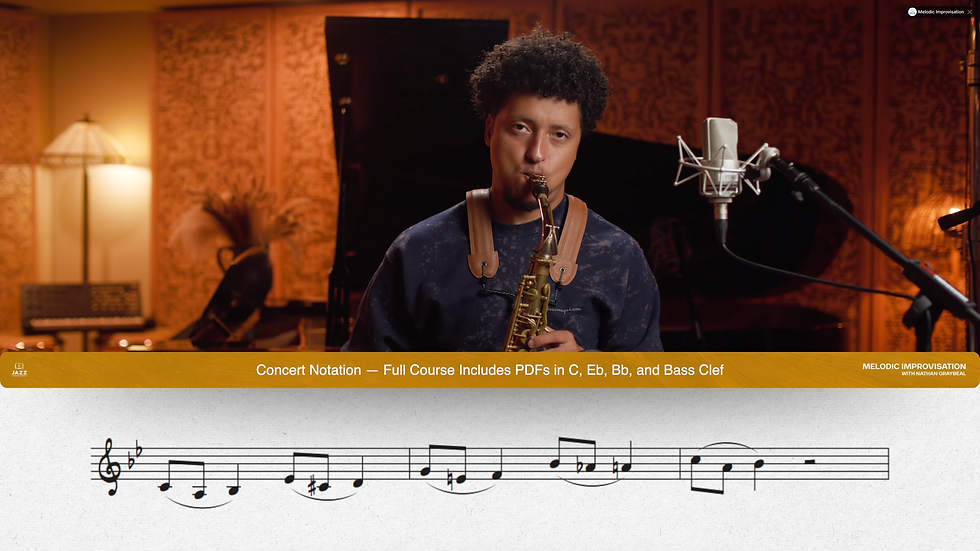
That's a really, really important one to know, and you can also make both of those notes chromatic.
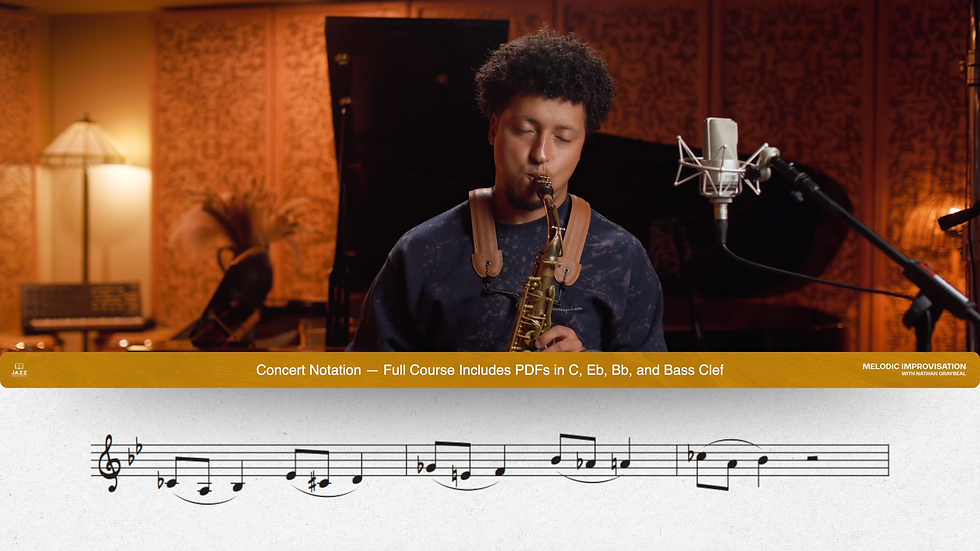
That's also a very common one, and again, you can switch the order.
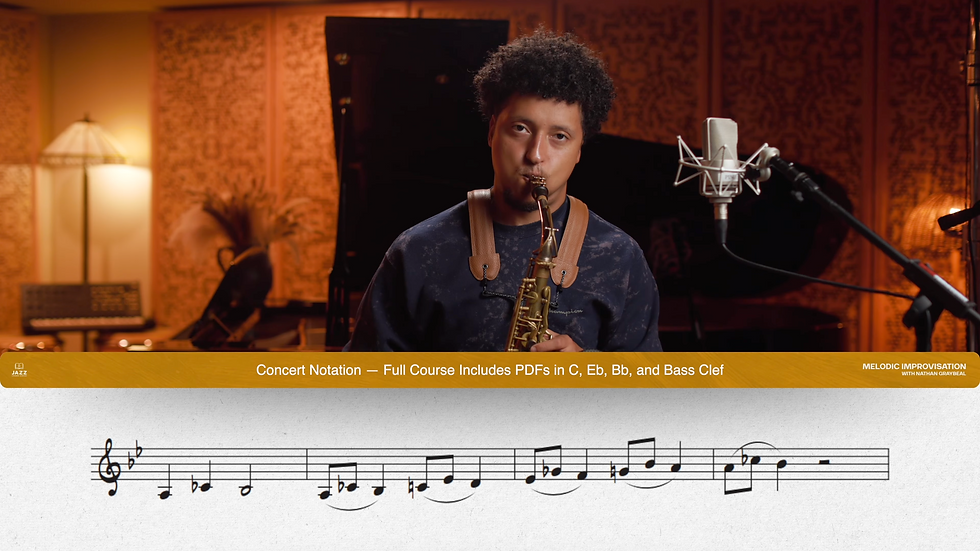
Another thing to know is that you can actually make your enclosures more than two notes. So, if we had this…
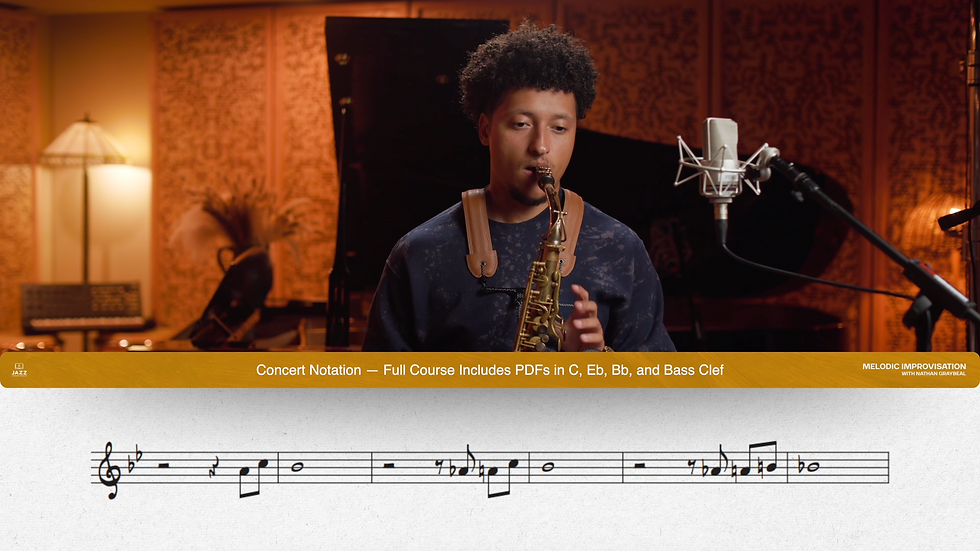
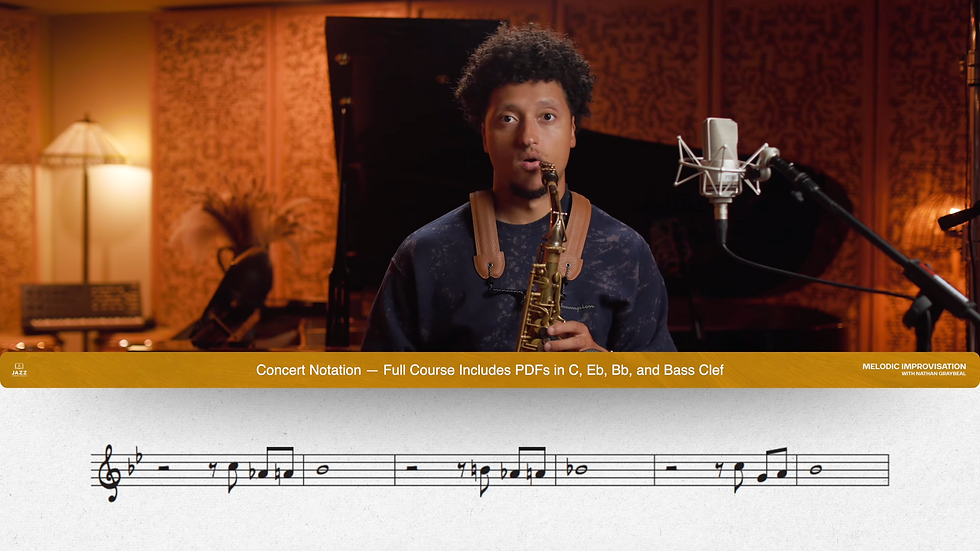
You can also make an enclosure by using a passing tone .
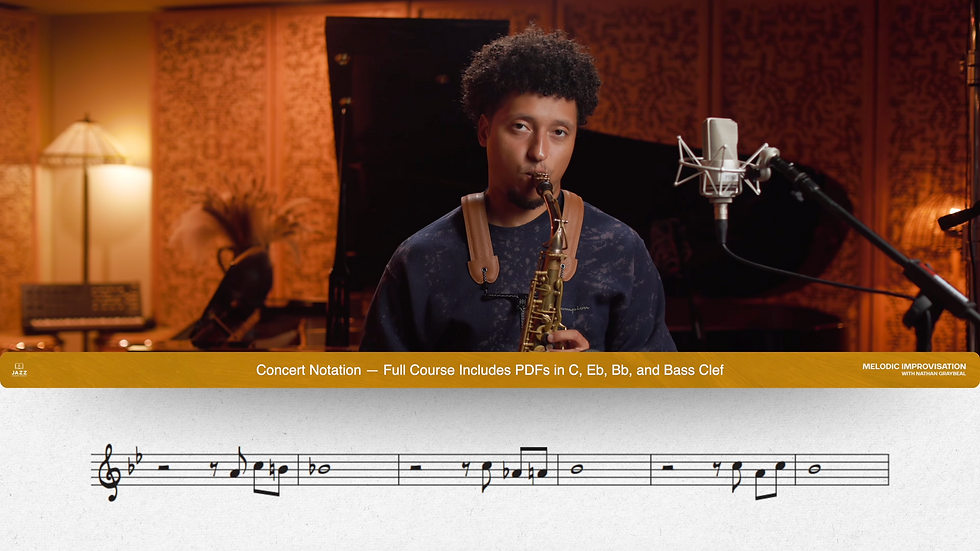
Or you can sort of double sandwich it. These can get extensive pretty quickly.
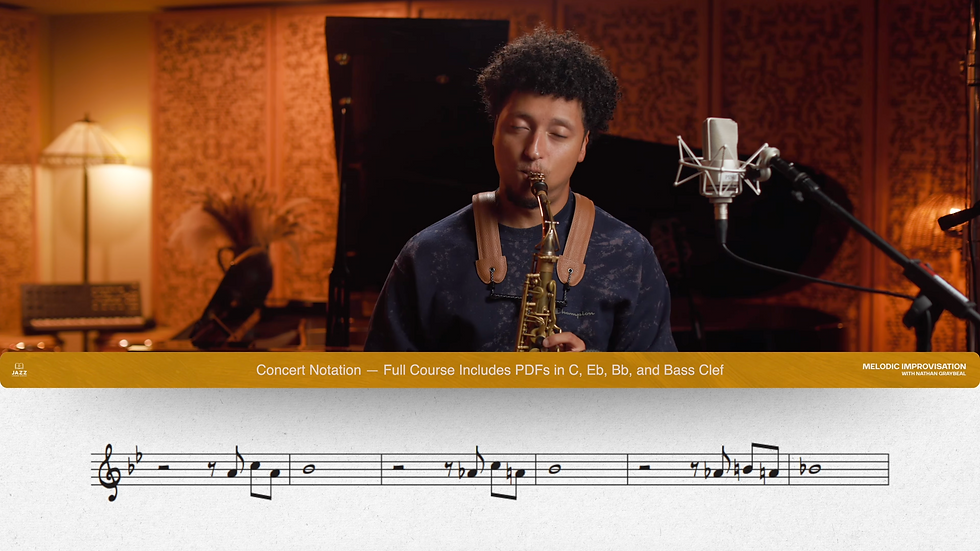
What Nathan recommends is just taking one enclosure that you like at a time, and stick to that until it's really comfortable. And once it feels too easy, after maybe a few days or weeks or so, learn another one.
Melodic shape & contour
Melodic contour is a huge topic, but we’re going to look at some practical approaches you can take.
One thing that you can do is over a minor and major chord. Let's start off with minor. You can go up to the diatonic third, so the minor third.
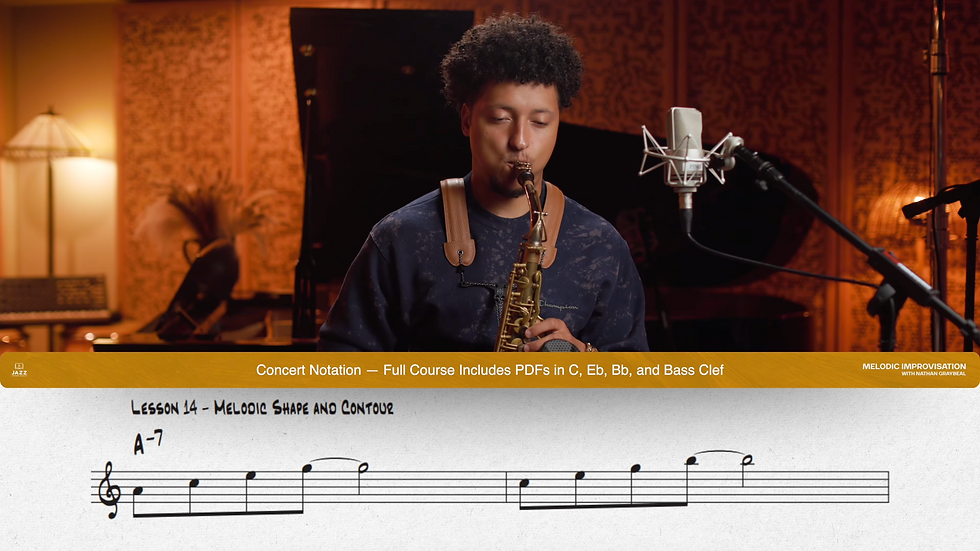
So if we had an Am7, go up to the C, you can play a Cmaj7. It's going to give you the Am7’s 3, 5, 7, and 9. But if you just think of it as a Cmaj7, you're going to get this sound.
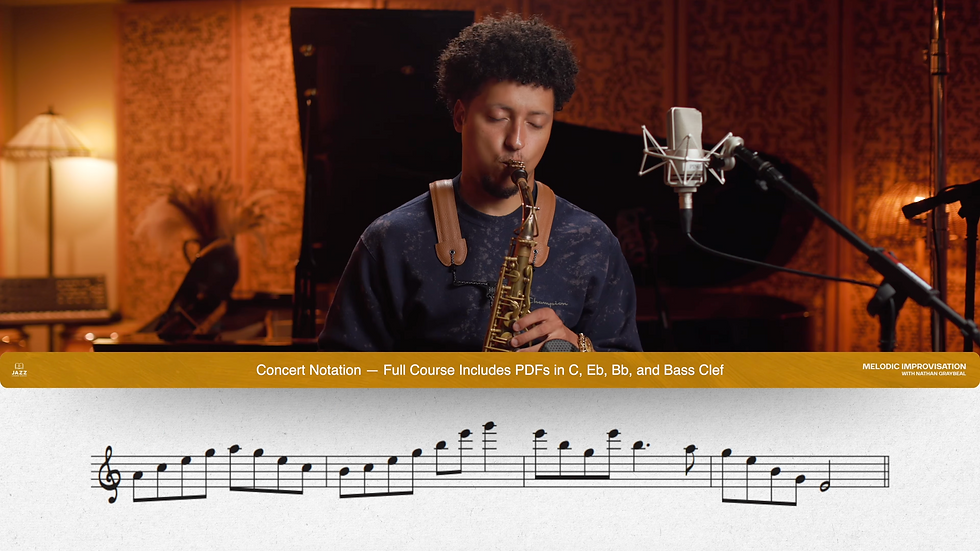
And as you're playing with the shape, you really want to try to use the full register of your horn. We encourage large interval leaps or playing the shape in the full range of the instrument.
Now, if we were to make this an Amaj7 chord instead.
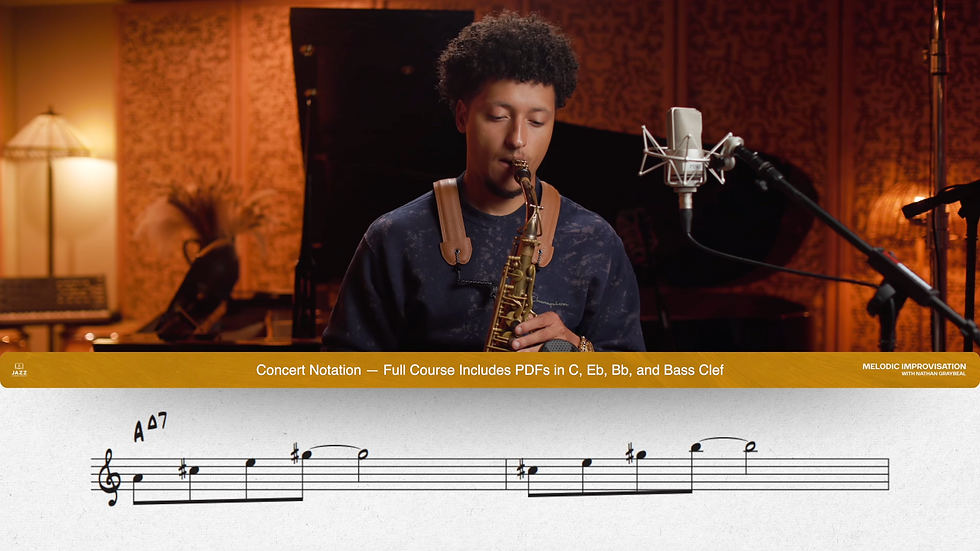
So now in Amaj7, you can go to the major third of that chord and play a minor seven instead, and it's going to give you this chord’s 3, 5, 7, and 9.
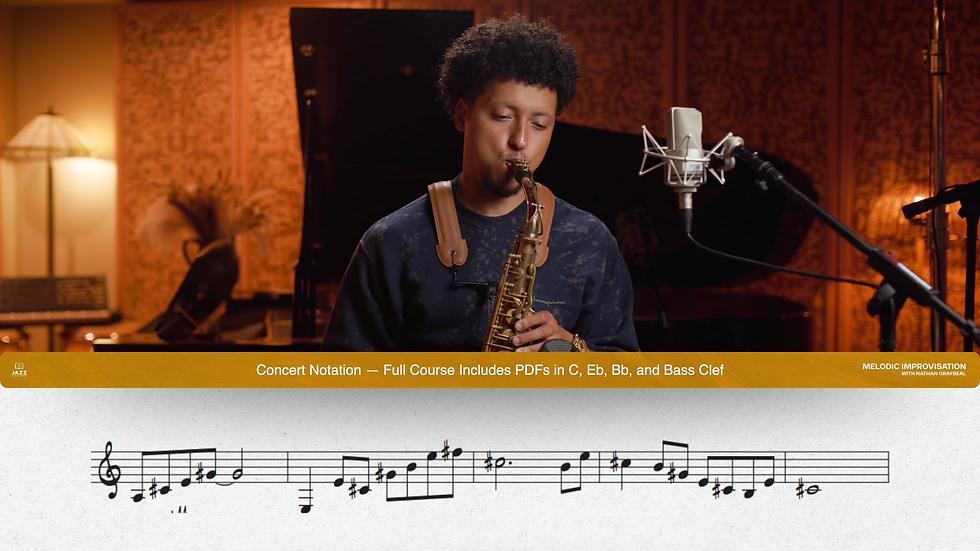
So we just played a C#m7 on top of that. So here's the chord, and then we’re going to play, and we’ll have that shape with various large intervals and using the full range of that horn.
This gives you nice alternate options that you can think about, sort of going outside of bebop here and stepping into the more modern era. But this is what we can hear players like Mark Turner or Melissa Aldana and a lot of our favorites doing all the time. They're taking a shape that's found within the scale and really utilizing the full range of their instrument.
Now let's talk about a shape that's really cool to play over a dominant seven chord. This is going to access that “up a half step sound,” aka the altered sound. So if you go to the third of your dominant seven chord, in this case an F7. Let's go to the A, and you're going to play what pianists call a Lydian grip, but really what it is, it's a maj7 chord, but with the b5. So if this would be the Amaj7b5 (or Amaj7#11), and the new shape you get is this.
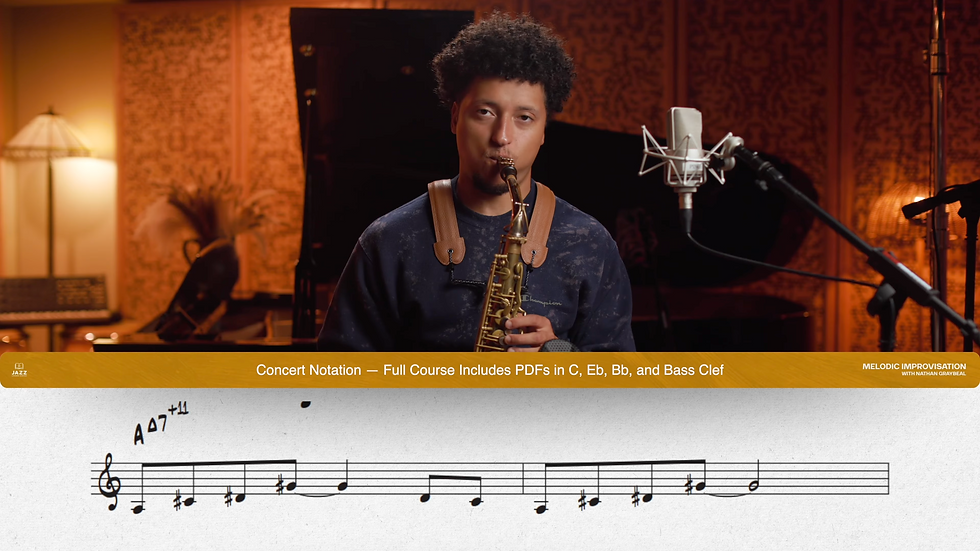
Sounds really cool. Joe Henderson used this shape a lot. He really popularized it in the saxophone world, and it sounds really good to do in the full range of your horn.
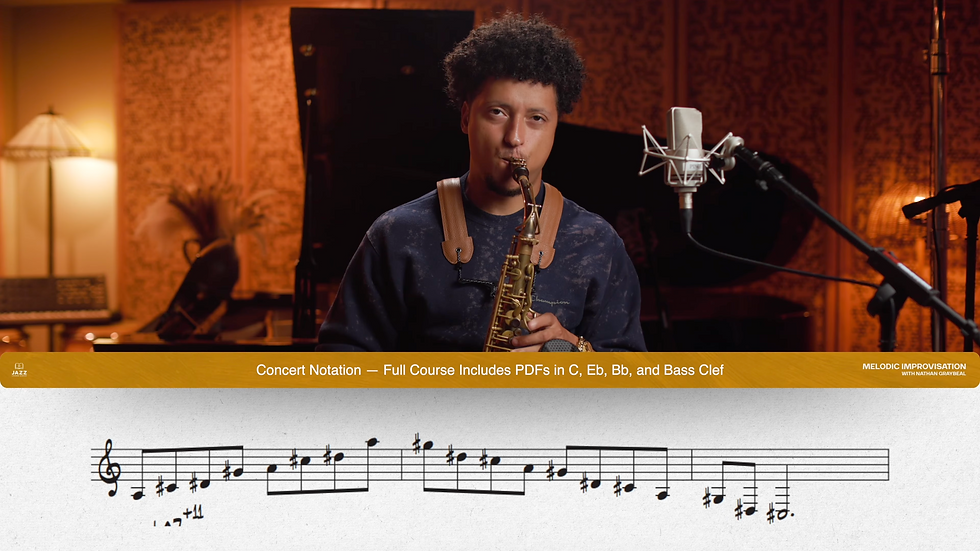
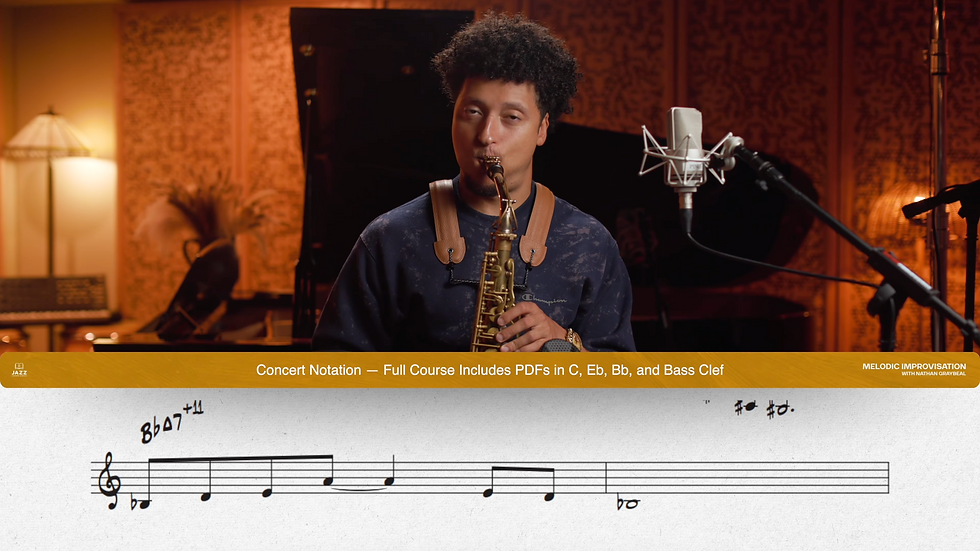
What's also cool is that shape is also going to work from the b5 of a m7b5. It's going to give you a diatonic sound. If we were to have a concert Em7b5 chord, there's a Bbmaj7#11 sound over that.
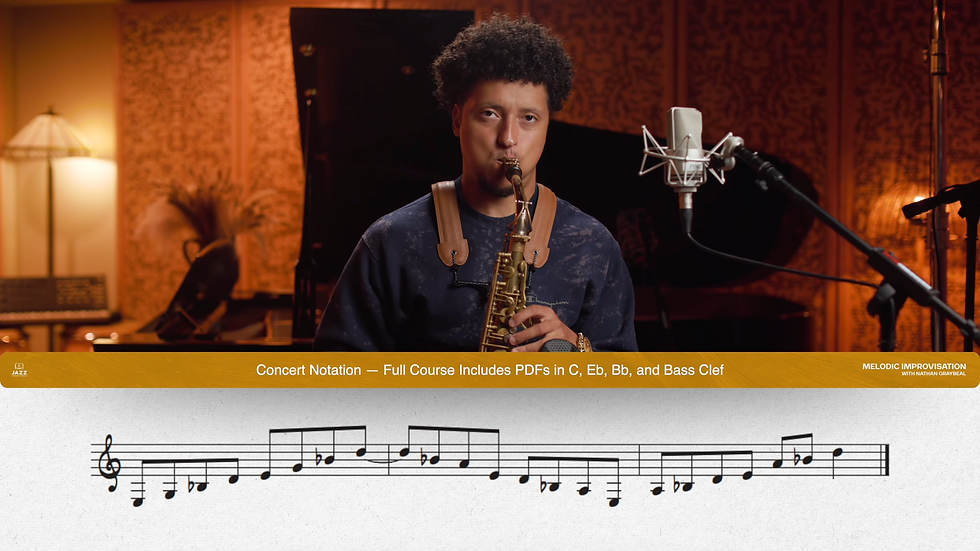
Applying these concepts to standards
Let’s look at these shapes over the tune Stella.
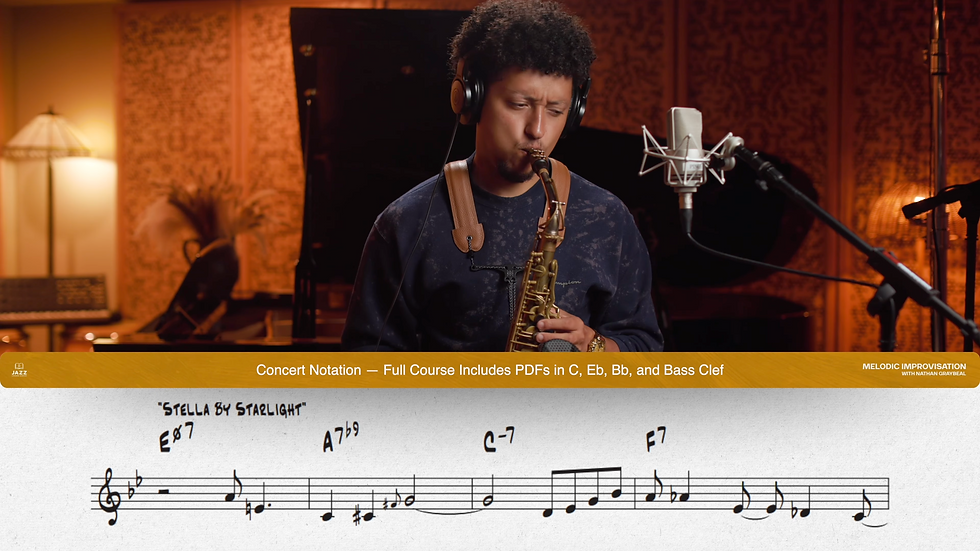
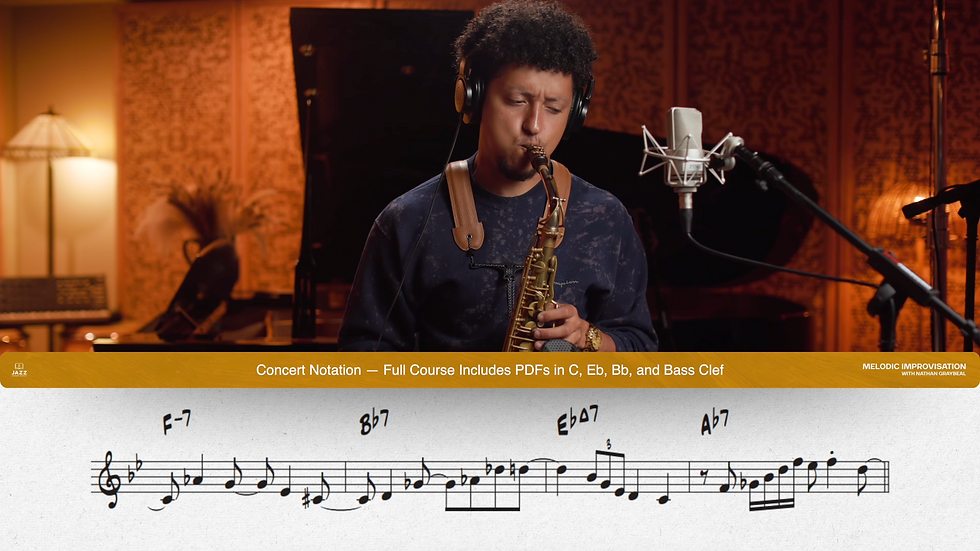
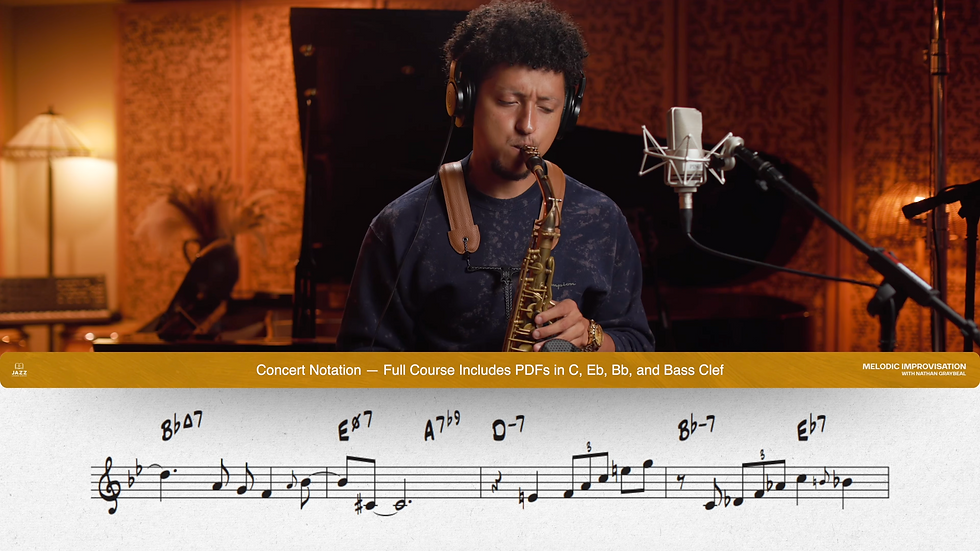

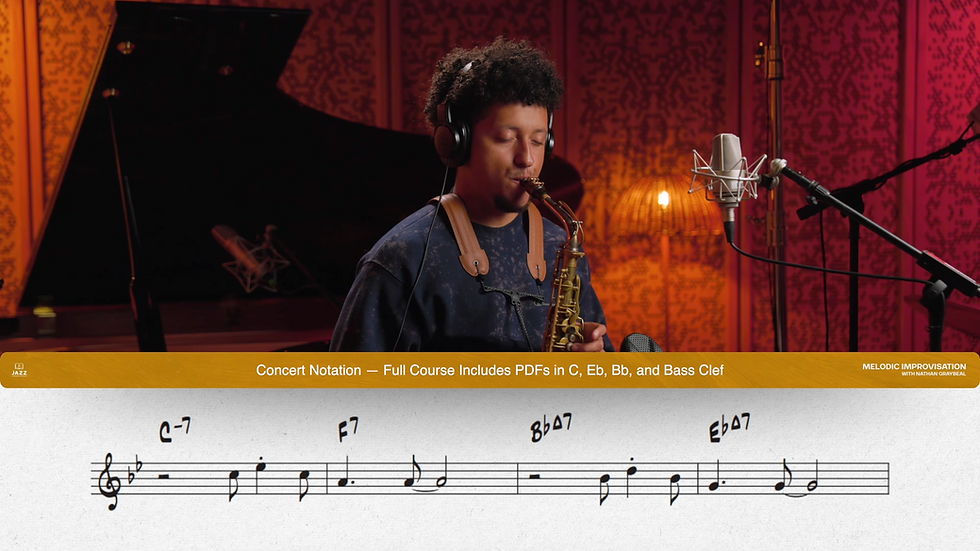
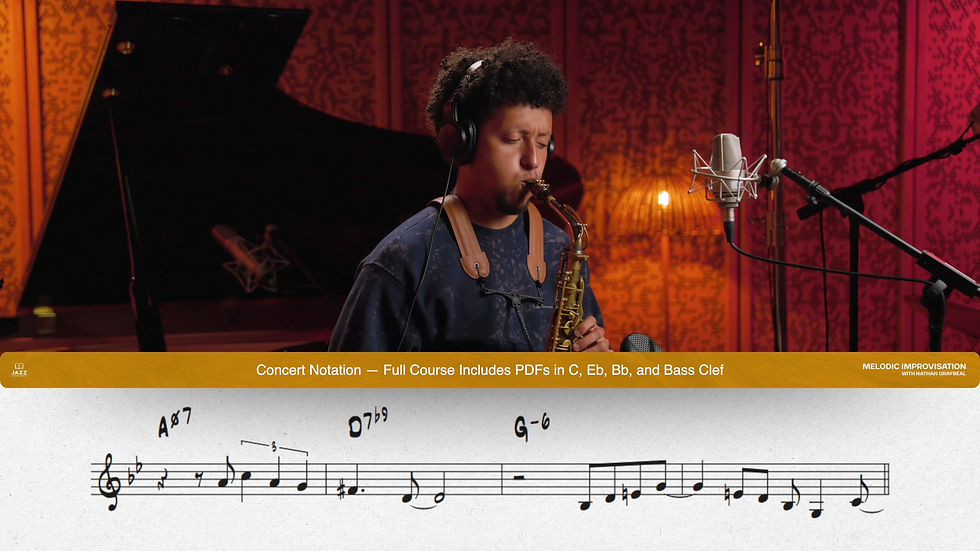
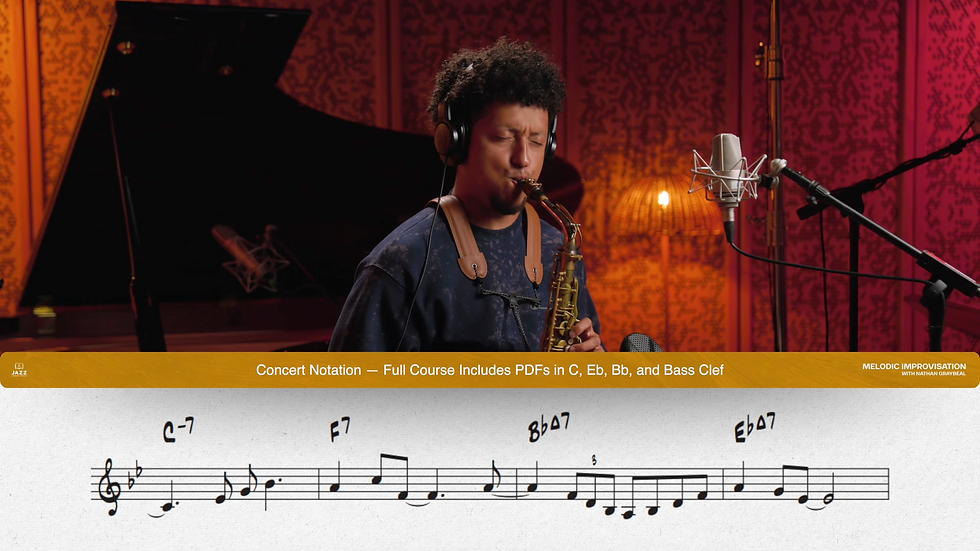
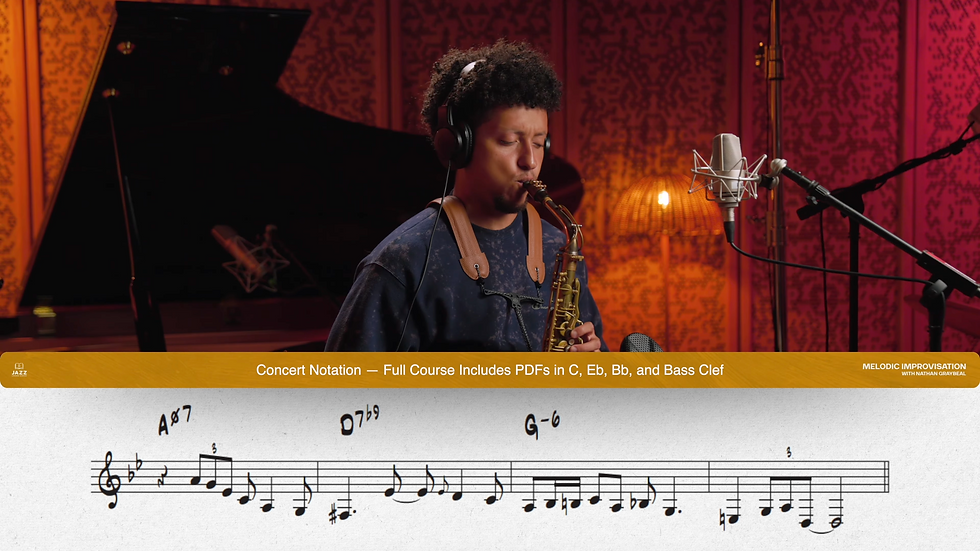
Now let’s look at Autumn Leaves while applying some of the concepts that we talked about earlier in the course. Over this one, let's try to focus on chord tone soloing and motif development. We'll start off this way, and then as we move on, we can start to diverge into improvisation.
Well that’s all we have for today, but if you want to learn more on this, make sure to check out our course Melodic Improvisation! And if you want to hear Nathan playing through anything we talked about today, check out our accompanying YouTube video, Nathan Graybeal’s Secrets to Melodic Improv.
We’ll see you next time!


Comments